Mental Age Test Filter Accuracy vs Professional Assessments
You have likely seen viral videos featuring a mental age test filter where a glowing number floats above a user's head. You might feel curious about what number would appear for you, yet slightly confused because you cannot find that specific lens on Instagram. Perhaps you are even skeptical about whether a camera effect can truly read your mind or if it is just a random generator.
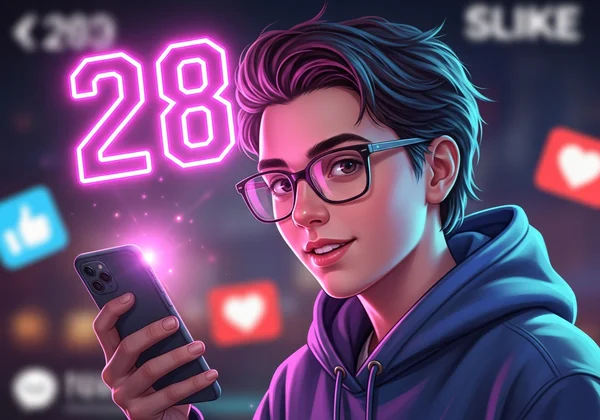
The reality behind these videos is often different from what it appears. Most of these viral clips do not use a magical facial scanner. Instead, they rely on web-based quizzes combined with creative video editing. This article explains how the trend works and how to get a result that truly reflects your inner self. If you want to skip the randomness and find a real answer, you can explore your cognitive maturity with a structured assessment.
The Truth About the Viral TikTok "Mental Age Filter"
If you have spent hours searching the effects gallery on TikTok or Instagram for a "mental age scanner" that works automatically, you are not alone. Millions of users have felt frustrated by this search. The reason you cannot find a single, unified "filter" that scans your face and spits out a psychologically accurate number is that it does not exist in that form.
Is the mental age test a filter or a real quiz?
The majority of the viral videos you see utilize a two-part process. Content creators are not using an Augmented Reality (AR) filter that analyzes facial features to determine maturity. Instead, they take a web-based quiz first. Once they get a result (e.g., "Mental Age: 45"), they screenshot it. They then use a separate video editing feature—usually a "Green Screen" effect—to place that screenshot above their head while recording a reaction.
The term mental age test filter is a misnomer. It describes the style of the video, not the technology behind the assessment. While basic "random number generator" filters exist on apps like TikTok, these are purely for entertainment. They have zero connection to your actual personality or cognitive processing.
Why you can't find the "scanner" on Instagram
Instagram’s effect gallery is filled with user-generated content. While you might find effects named "Mental Age," many are simple "roulette" filters. These filters cycle through numbers rapidly and stop on a random one. They do not ask questions, analyze behavior, or measure psychological depth.
If you seek the specific, accurate result seen in a friend’s video, they likely didn’t use an Instagram filter to get the number. They used an external website to take a test and brought that result back into the app. Understanding this distinction moves you from uncertain entertainment to genuine self-discovery.
How to Join the Mental Age Challenge (3 Steps)
Participating in this trend is less about finding a hidden button and more about creating a narrative. The most popular videos feature creators genuinely surprised by their results. Here is how the trend is typically constructed by creators who want to share authentic results rather than a random number.
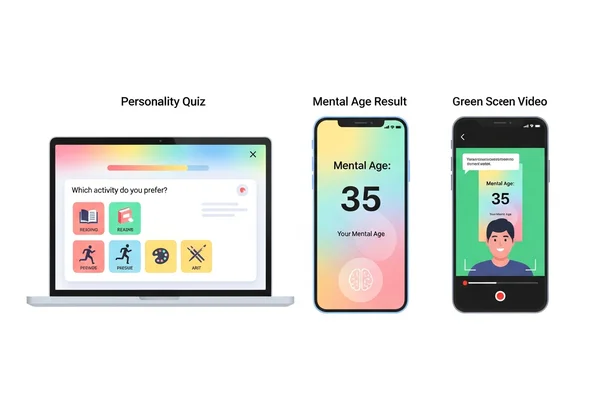
Step 1: Take the Web-Based Quiz
The first step happens outside of social media. Users visit a dedicated website to take a structured mental age test. This involves answering questions about lifestyle preferences, decision-making styles, and reactions to specific scenarios. This process provides the "data" for the video. It transforms the trend from a random game into a moment of personal revelation.
Step 2: Screenshot Your Result
Once the quiz generates a result page—usually showing the mental age alongside a description like "Sophisticated" or "Carefree"—the user takes a screenshot. This image becomes the "prop" for the video. It serves as evidence that validates the reaction you are about to record.
Step 3: Apply the Green Screen Effect
Back in the social media app (TikTok, Instagram Reels, or CapCut), the user selects a "Green Screen Sticker" or "Photo Overlay" effect. They upload the screenshot they just took. The app places this image over their video feed. The user hits record and reacts to their result in real-time. This method is the standard way to create the "mental age test filter" look that has taken over your feed.
7 Signs Your Mental Age Differs From Your Biological Age
Before creating content, you might wonder why you feel "out of sync" with your biological age. This feeling of being misunderstood is a common psychological experience. It reflects your cognitive and emotional baseline rather than immaturity.
You Prefer Stability Over Spontaneity
If friends constantly suggest last-minute road trips and your instinct is to check your calendar, your mental age is likely higher than your physical age. This need for structure suggests a "Settler" mindset, often associated with a mental age of 40+.
You Connect Better With Older/Younger Groups
Do you sit at the "adult table" during family gatherings despite being in your 20s? Or perhaps you are in your 40s but find the energy of younger colleagues more relatable? Gravitating toward a different age group strongly indicates a mental age discrepancy.
Your Reaction to Trends is Indifference
When a new social media challenge explodes, does your brain immediately go to "I need to try that!" or "Why is this happening?" A high mental age often features a selective filter for trends. You engage only with what brings value. A lower mental age tends to be more exploratory and eager to participate.
You Prioritize Comfort Over Style
This is the classic "old soul" marker. If given the choice between a stunning but uncomfortable outfit and practical clothing that feels good, the decision is instant. A higher mental age prioritizes internal well-being over external validation.
You approach risk with calculation, not impulse
Consider how you handle money or career changes. A "younger" mental age often views risk as an exciting opportunity for high reward. An "older" mental age views risk as a variable to manage. If you analyze consequences rather than fantasizing about outcomes, your cognitive maturity is likely advanced.
Your Entertainment Choices Reflect Nostalgia
If your playlist features music from decades before you were born, or you prefer classic cinema over modern blockbusters, it indicates resonance with different eras. This "anemoia"—nostalgia for a time you never knew is frequently linked to a higher mental age.
You Handle Conflict with Avoidance or Diplomacy
How do you react to drama? A younger mental processing style might engage in conflict head-on. A mature mental processing style often seeks to de-escalate, negotiate, or simply walk away. If you play the mediator in your friend group, your mental age likely anchors the circle.
Random Scanners vs. Psychological Quizzes: Key Differences
It is important to manage expectations when engaging with these tools. There is a massive gap between the "filters" on TikTok and a legitimate assessment. Mistaking one for the other can lead to disappointment or a skewed self-image.
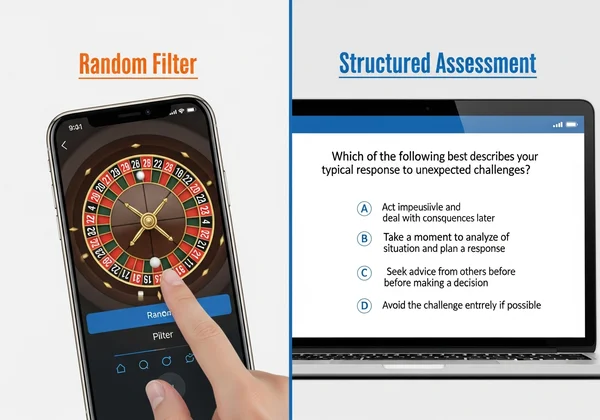
How Random Filters Work (The "Gimmick")
Native filters inside social apps typically utilize a simple random number generator (RNG). When the effect starts, the code cycles through a list of numbers (e.g., 5 to 99) and stops based on a timer or tap.
- Input: None (or basic facial tracking).
- Logic: Pure chance.
- Purpose: Comedy and viral sharing.
- Accuracy: Zero.
If you retake a filter-based test immediately, you will likely get a completely different number. This inconsistency proves the tool is a toy, not a test.
The Role of AI in Deep Analysis
In contrast, a structured web-based assessment uses an algorithm based on psychometric principles. It analyzes your choices rather than your face. By evaluating responses to various stimuli—ranging from color preference to moral dilemmas—the system builds a profile.
- Input: User decisions and behavioral preferences.
- Logic: Pattern recognition and psychological archetypes.
- Purpose: Self-understanding and reflection.
- Accuracy: Consistent with your current state of mind.
To bridge the gap between entertainment and insight, look for tools that explain why you got that number. You can start a reliable mental age assessment that goes beyond the gimmick to provide a detailed breakdown of your personality.
How a Legitimate Mental Age Test Works
If a camera cannot scan your brain, how does a test determine your mental age? Legitimate assessments rely on comparative data and psychological modeling. They map your worldview against statistical averages of different age groups.
What factors does a structured test measure?
A comprehensive test evaluates three core pillars:
- Complexity of Thought: Do you see the world in black and white (younger cognitive stages) or shades of gray (maturity)?
- Emotional Regulation: How do you process disappointment, joy, or anger? The delay between stimulus and reaction is a key age indicator.
- Values and Priorities: The shift from seeking novelty to seeking stability is a universal human progression. The test measures where you currently stand on this timeline.
Can your mental age change over time?
Absolutely. Unlike biological age, your mental age is fluid. A stressful life event might force you to mature quickly. Conversely, entering a period of freedom can lower your mental age, helping you reconnect with your inner child. These tests are not medical diagnoses but snapshots of your current psychological state. They serve as tools for validation.
Ready to Reveal Your True Inner Age?
The viral mental age test filter trend is fun, but it often leaves users feeling unsatisfied because the result is random. You deserve more than a lottery number attached to your forehead. You deserve to understand the unique blend of experiences, thoughts, and emotions that make up your personality.
Whether you are a 20-year-old with the wisdom of a sage, or a 50-year-old with the curiosity of a teenager, knowing your true mental age is liberating. It explains your relationships, career choices, and hobbies.
Put aside the random scanners. If you are ready to see the real number and understand the psychology behind it, you can begin your journey of self-discovery right now. No downloads, no random guessing—just honest insights.
Frequently Asked Questions
Is the mental age test a filter or a real quiz?
The accurate results in viral videos come from a real, web-based quiz. The "filter" is usually just a visual effect used to display a screenshot of those quiz results. Native TikTok/Instagram filters are typically random games with no scientific basis.
Can facial features actually reveal your mental age?
No. While stress or lifestyle can affect physical aging, no consumer technology can determine cognitive maturity by scanning your face. Mental age relates to psychology and behavior, which requires user input to measure accurately.
What does it mean if my mental age is older than my real age?
Having a mental age older than your biological age often means you are an "old soul." You likely value stability, think deeply before acting, and connect easily with older individuals. It is a sign of maturity, not a defect.
Is mental age the same as IQ?
No. IQ (Intelligence Quotient) measures cognitive processing speed, pattern recognition, and logical problem-solving. Mental Age measures emotional maturity, life perspective, and behavioral tendencies. You can have a high IQ but a young mental age, or vice versa.
Where can I find a mental age test that doesn't require a download?
You can take a comprehensive mental age test directly in your web browser. This avoids downloading suspicious apps. Web-based assessments are generally safer and provide more detailed analysis than the "scanner" apps found in mobile app stores.