Mental Age Test: How Your Travel Style Reveals Your True Inner Age
Have you ever wondered why some friends crave spontaneous, adrenaline-fueled adventures while others find deep satisfaction in a well-planned, relaxing getaway? Your vacation preferences might reveal more about your inner world than you think. In fact, they can offer clues to your cognitive style and, fascinatingly, your mental age.
Our analysis of thousands of test results has identified compelling patterns that link different travel styles to distinct cognitive characteristics. These aren't just quirks; they reflect how we process information, handle spontaneity, and find joy in the world. So, are you a thrill-seeking backpacker or a comfort-loving resort-goer?
Get ready to discover how your vacation preferences might just reveal your inner age in ways you never expected! More importantly, you'll gain insights into what this means for your everyday decisions and lifestyle choices. Ready to explore the connection? A great first step is to find your mental age and see where you land on the spectrum.

Adventure Seekers: The Young-at-Heart Travelers
The call of the unknown is a powerful one. For some, travel is about pushing boundaries, embracing the unexpected, and collecting experiences instead of souvenirs. These are the Adventure Seekers. Their passports are filled with stamps from off-the-beaten-path destinations. Their approach to travel often aligns with a younger mental age, characterized by openness, flexibility, and a high tolerance for ambiguity.
If you’re the type to book a one-way ticket, stay in a bustling hostel, or say "yes" to a mountain trek you hadn't planned, you likely fall into this category. Your travel style isn't just a preference; it’s a reflection of a mind that thrives on novelty and stimulation. This young-at-heart approach values the journey just as much, if not more, than the destination itself.
Backpacking Through Life: Traits of Low-Mental-Age Travelers
Travelers with a lower mental age often exhibit traits that make them natural explorers. They are typically more adaptable and less reliant on rigid schedules. Think about it: the idea of navigating a foreign city without a map or trying a local dish without knowing the ingredients is exciting, not stressful.
This "backpacking through life" mentality is built on curiosity and a desire for authentic experiences. It prioritizes freedom over comfort and personal growth over predictable luxury. These individuals see the world as a playground of possibilities, and their travel choices reflect a deep-seated belief that the best moments in life are often unscripted.
Why Risk-Taking Signals Cognitive Flexibility
Choosing an adventurous travel style often involves a degree of calculated risk. Whether it's bungee jumping in New Zealand or haggling in a crowded market in Marrakech, these situations demand quick thinking and mental agility. This willingness to step into the unknown shows cognitive flexibility. That's the brain's ability to adapt its thinking when moving between concepts and switching between different mental sets.
A mind that embraces risk is one that is not afraid to make mistakes. It sees challenges as opportunities to learn and grow. This cognitive approach, often associated with a younger mental age, is essential for innovation and problem-solving, both on vacation and in daily life. It’s the engine that drives us to try new things and expand our horizons.
The Spontaneous Decision-Maker's Brain
Spontaneity is the hallmark of the Adventure Seeker. Making spontaneous decisions comes naturally to them. They might suddenly change plans, follow a local's recommendation, or extend a trip on a whim. This ability to make quick, intuitive decisions comes from a brain that responds well to its environment and trusts gut feelings.
This contrasts sharply with a more analytical, deliberate style of decision-making. Spontaneous travelers are comfortable with uncertainty and can process new information rapidly to make a choice. This mental quickness and adaptability are key traits of a youthful cognitive profile, allowing them to seize opportunities as they arise. Does this sound like you? Taking a mental age quiz can offer fascinating insights into your decision-making style.
Comfort Explorers: The Methodical Travelers
On the other side of the spectrum are the Comfort Explorers. For these individuals, a vacation is a well-deserved escape from the chaos of daily life. It’s a time to recharge, relax, and enjoy the finer things in a predictable and secure environment. Their travel style is defined by planning, comfort, and a preference for quality over quantity.
These travelers find joy in meticulously researched itineraries, five-star reviews, and all-inclusive packages that remove the guesswork. The idea of a stressful travel day is their worst nightmare. This methodical approach often correlates with a higher mental age, reflecting emotional maturity, a strong sense of self-awareness, and an appreciation for stability and order.

The All-Inclusive Mentality: High-Mental-Age Preferences
The appeal of an all-inclusive resort or a guided luxury tour goes beyond simple convenience. It reflects a mindset that values peace and predictability. After years of navigating life's complexities, many people with a higher mental age prioritize experiences that are rejuvenating rather than demanding.
Here's something interesting: this "all-inclusive mentality" is about optimizing for enjoyment and minimizing stress. It’s a conscious choice to delegate the logistical details to experts, freeing up mental energy to simply be present and enjoy the moment. This preference for curated experiences often indicates a mature understanding of one's own needs and limits.
Why Planning Ahead Reflects Emotional Regulation Skills
The detailed planner is often a master of emotional regulation. The process of researching destinations, booking flights months in advance, and creating a daily itinerary is a way of managing future uncertainty and anxiety. By anticipating potential problems and having contingency plans, they create a sense of control and security.
This foresight is a hallmark of emotional maturity. Instead of reacting to problems as they happen, the Comfort Explorer proactively prevents them. This skill, often developed over many years of experience, allows for a truly relaxing and worry-free vacation. It shows an ability to delay gratification and invest effort upfront for a greater reward later.
The Calculated Traveler's Cognitive Approach
The cognitive approach of a Comfort Explorer is deliberate and analytical. They weigh pros and cons, read countless reviews, and make decisions based on data and logic rather than impulse. This calculated method ensures their time and resources are spent wisely, leading to a highly satisfying and seamless travel experience.
This style of thinking demonstrates a well-developed executive function—the set of mental skills that includes working memory, flexible thinking, and self-control. It’s a sign of a mature mind that understands how to achieve a desired outcome through careful strategy and execution.
The Hybrid Traveler: Finding Your Mental Age Sweet Spot
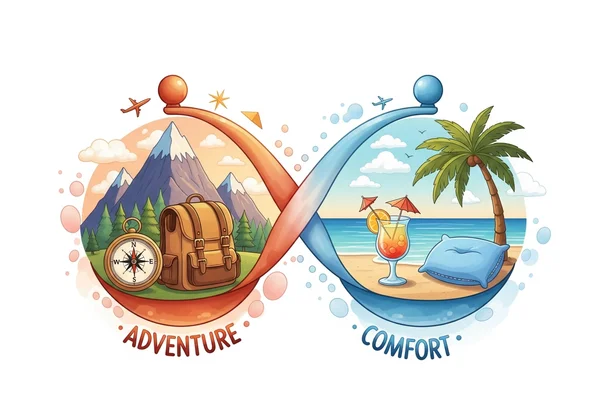
Of course, most of us aren't purely one type or the other. You might crave a spontaneous backpacking trip one year and a luxurious, all-inclusive beach vacation the next. This is the Hybrid Traveler, a person whose travel style is fluid and adaptable. They represent the fascinating middle ground, where youthful curiosity meets mature wisdom.
This blended approach shows that mental age isn't a fixed point but a dynamic spectrum. The Hybrid Traveler embodies this complexity, choosing their vacation style based on their current needs, mood, and life circumstances. They understand that both adventure and comfort have their time and place.
When Your Travel Style Changes with Your Life Stage
Our travel preferences are rarely static. You've probably noticed this in your own life. The solo backpacking trip you took in your twenties might seem less appealing when you have a young family. Similarly, after years of structured family vacations, you might rediscover a longing for unstructured adventure in your fifties.
These shifts are natural and often reflect changes in our priorities, responsibilities, and even our brain chemistry. Our mental age can also evolve as we gain new experiences and perspectives. Recognizing how your travel style changes with your life stage is a powerful form of self-awareness.
The Mental Age Spectrum in Vacation Decision-Making
When deciding on a vacation, the Hybrid Traveler intuitively balances different aspects of their personality. Part of them might want the thrill of the unknown (a younger mental age trait), while another part craves the security of a well-thought-out plan (a higher mental age trait).
Their final decision—perhaps a road trip with a few key hotels booked but with days left open for exploration—is a beautiful compromise. It showcases a balanced cognitive profile, one that can appreciate both freedom and structure. This nuanced approach is often a sign of a well-integrated and self-aware individual.
How Our AI Identifies Complex Mental Age Profiles
This is where a simple quiz result falls short and a deeper analysis shines. The Mental Age Test goes beyond a single number. For those who choose to answer a few extra questions, our optional AI-powered analysis can identify these complex, hybrid profiles.
The AI looks at the patterns in your answers across different life domains—not just travel. It can pinpoint the unique blend of spontaneity, planning, risk-taking, and desire for comfort that makes up your personal cognitive style. This provides a much richer, more personalized report that reflects the true complexity of your inner age.

Your Travel Personality: More Than Just a Vacation Choice
So next time you're planning your getaway, remember: your choice between a spontaneous adventure and a meticulously planned vacation says more about you than you might think. Whether you're booking that last-minute hostel or researching your next all-inclusive resort, embrace what makes your travel style uniquely yours!
This self-knowledge is empowering. It helps you understand why you make the choices you do and allows you to lean into your natural strengths. By recognizing your inner traveler, you can better navigate your career, relationships, and personal growth.
Ready to discover how your unique travel style connects to your inner world? Take our free mental age test today and unlock a personalized analysis of your cognitive and emotional landscape. Your next journey of self-discovery starts now!
Frequently Asked Questions About Travel Style and Mental Age
What is the connection between travel style and mental age?
The connection lies in our cognitive and emotional preferences. A younger mental age is often associated with higher openness to experience, spontaneity, and risk-taking, which aligns with adventure travel. A higher mental age often correlates with better planning skills, a desire for comfort, and strong emotional regulation, which suits a more methodical travel style.
Can my mental age change based on my travel experiences?
While your core personality is relatively stable, new experiences can certainly influence your perspective and behaviors. Pushing yourself out of your comfort zone on an adventurous trip might foster more cognitive flexibility. Similarly, a relaxing trip might teach you the value of planning. Your mental age is dynamic and can evolve with you.
Is my preferred travel style "better" or "worse" based on my mental age?
Absolutely not. There is no "better" or "worse" travel style or mental age. Each has its unique strengths and joys. The goal is self-awareness—understanding your own preferences so you can choose experiences that bring you the most fulfillment and happiness.
How accurate is the connection between travel preferences and mental age?
Our test is designed for entertainment and self-reflection, not as a clinical diagnostic tool. The connections we observe are based on patterns found in thousands of anonymous user results. They provide interesting correlations that can offer a new perspective on your personality, but they are not scientific certainties.
Can I use this knowledge to choose better vacations for myself?
Yes! Understanding your travel personality is a fantastic tool for planning your next trip. If you know you thrive on structure, you can confidently book that guided tour. If you know you need spontaneity, you can leave room in your itinerary for adventure. To get a deeper insight, start your test and see what it reveals about your unique profile.