Mental Age Test TikTok – How It Works and What Your Result Really Means
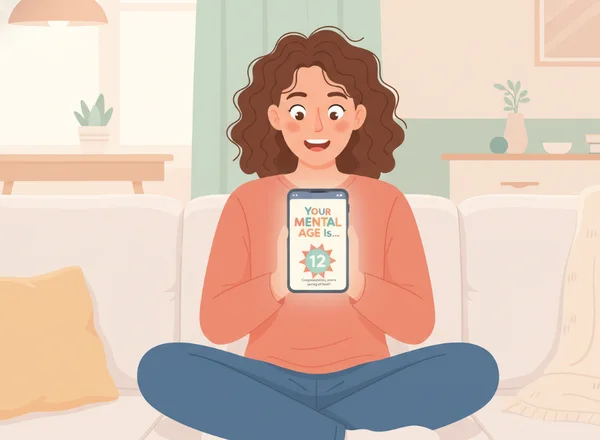
You have probably seen it all over your feed. Someone films themselves, states their real age, and then dramatically reveals a completely different number — their so-called mental age. The mental age test trend on TikTok has captivated millions of users who are eager to find out whether their mind matches their birth certificate.
But what exactly is this quiz, how does it work, and should you take the result seriously? In this guide, you will learn everything about the TikTok mental age test, discover how to take it step by step, understand what your score actually means, and learn why this trend keeps coming back. Along the way, you will also get a clear picture of where fun ends and real self-reflection begins.
What Is the Mental Age Test on TikTok?
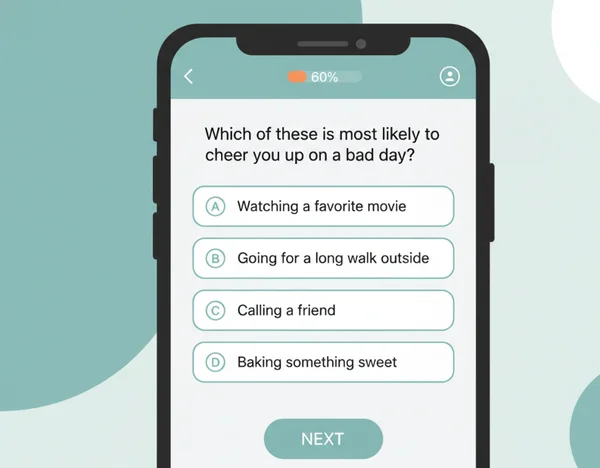
The mental age test is an online personality quiz that claims to measure your psychological maturity rather than your biological age. Unlike an IQ test, it does not assess intelligence. Instead, it evaluates your habits, preferences, emotional tendencies, and everyday decision-making style through a series of simple true-or-false or multiple-choice questions.
The quiz originally comes from Japan and was first created around 2013. It has since been translated into more than 30 languages and taken by tens of millions of people across more than 150 countries. The most widely used version lives on the website A Real Me, though several alternative versions now exist online.
How the TikTok Trend Started
The test gained massive traction on TikTok when creators began filming reaction-style videos. A typical TikTok mental age test video follows a simple formula: the creator states their actual age, pauses for dramatic effect, and then reveals their quiz result. The format is quick, shareable, and often hilarious — especially when a 20-year-old discovers a mental age of 58, or a 40-year-old gets a result of 12.
Hashtags like #mentalage and #mentalagetest have gathered hundreds of millions of views. The trend first surged around 2022 and continues to resurface regularly, often riding new waves of social media interest in personality and self-discovery quizzes.
Why It Keeps Going Viral
Several factors fuel the trend's staying power:
- Surprise factor — The gap between real age and mental age creates entertaining content.
- Easy participation — The test takes just a few minutes to complete.
- Social currency — Sharing results sparks conversation and friendly debate.
- Identity exploration — People genuinely enjoy learning something unexpected about themselves.
How to Take the Mental Age Test From TikTok
Taking the mental age test is straightforward. Here is a step-by-step guide so you can try it yourself.
Step-by-Step Instructions
- Open the quiz website — Search for "mental age test" or visit the A Real Me website directly. You can also find links shared within popular TikTok videos about the trend.
- Choose whether to enter your real age — Before starting, the quiz gives you the option to input your actual age or keep it secret. Entering your age allows the result to show a comparison.
- Answer the questions — You will be presented with approximately 30 questions about your personality, daily habits, and reactions to various scenarios. Questions range from "I always act before thinking" to "I can hit a cockroach with a book."
- View your result — After completing all questions, the quiz instantly calculates and displays your mental age along with a brief description of what that age represents.
- Share on TikTok (optional) — Screenshot your result and create a video following the popular format. Many creators use trending sounds and the classic "I'm [real age], but my mental age is..." caption.
Tips for an Honest Result
-
Answer based on your first instinct, not what sounds "ideal."
-
Avoid overthinking each question. The quiz measures everyday tendencies, not deep psychological traits.
-
Take the test when you are relaxed. Your mood can influence how you respond.
What Does Your Mental Age Actually Mean?
Your mental age result is meant to reflect your psychological tendencies — not your intelligence or emotional health. According to the quiz creators, mental age is defined as "a measure of a person's psychological abilities in comparison to the number of years it takes for an average child to reach the same level."
Breaking Down the Results
Here is a general guide to understanding common mental age ranges:
| Mental Age Range | General Interpretation |
|---|---|
| Under 15 | You tend to approach life with playfulness, curiosity, and spontaneity. You may prefer fun over responsibility. |
| 15–25 | You likely balance adventure with growing awareness. You enjoy new experiences but are developing practical thinking. |
| 26–35 | You tend toward stability, planning, and thoughtful decision-making. You may value reliability and routine. |
| 36–50 | You often approach situations with patience and wisdom. Long-term thinking comes naturally to you. |
| Over 50 | You may lean toward caution, reflection, and a preference for calm over chaos. Experience shapes your worldview. |
Mental Age vs. Chronological Age
Your chronological age is simply the number of years since you were born. Your mental age, as defined by these quizzes, is a loose reflection of your behavioral and emotional patterns. A large gap between the two does not mean something is wrong — it simply suggests your personality leans in a particular direction.
For example, someone who is 30 years old with a mental age of 18 might be someone who stays adventurous, open-minded, and spontaneous. Meanwhile, a 22-year-old with a mental age of 40 might be an especially thoughtful and cautious person. Neither result is better or worse.
Is the TikTok Mental Age Test Accurate?
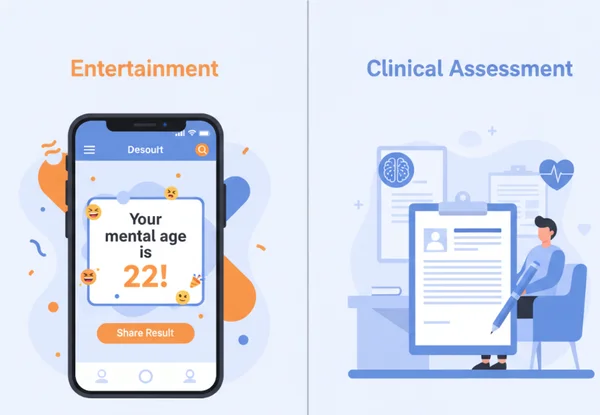
This is one of the most common questions people ask after taking the quiz. The short answer: the mental age test on TikTok is designed for entertainment, not clinical accuracy.
What the Quiz Creators Say
The quiz website itself notes that the algorithm has been improved based on user feedback over the years and that many users find it "very reliable." However, no peer-reviewed research or scientific study has been cited to validate its accuracy.
What Psychology Experts Would Say
From a psychological perspective, true mental age assessment involves standardized instruments administered by trained professionals. The concept of mental age in academic psychology traces back to early intelligence testing by Alfred Binet in the early 1900s, but modern psychology has largely moved away from this specific framework.
The TikTok version is a self-report quiz with no controlled testing conditions, no normative data, and no clinical validation. Therefore, it is best understood as a fun personality snapshot rather than a meaningful diagnostic result.
Key Limitations to Keep in Mind
-
Results can change based on your mood, time of day, or recent experiences.
-
The questions are broad and may not capture cultural or individual nuances.
-
There is no "right" or "wrong" mental age — the quiz is not measuring a deficit or advantage.
-
The test cannot and does not diagnose any psychological condition.
Why the Mental Age Test TikTok Trend Matters for Self-Reflection
Even though the quiz is not scientifically rigorous, it opens a genuinely useful door: self-reflection. Many people take the mental age test tiktok quiz and then pause to think about why they got a certain result. That moment of curiosity is valuable.
Turning a Viral Trend Into Personal Insight
Here are a few ways to use your mental age result as a starting point for deeper thinking:
- Notice your reaction — Were you surprised, amused, or even a little defensive? Your emotional response can reveal what you value about maturity and identity.
- Reflect on the questions — Which questions made you hesitate? Those moments of uncertainty often highlight areas worth exploring.
- Compare thoughtfully — If your mental age is very different from your real age, ask yourself what life experiences or personality traits might explain the gap.
- Avoid labels — A single quiz result does not define you. Use it as a conversation starter, not a verdict.
When Fun Quizzes Inspire Real Growth
The popularity of the mental age test tiktok trend shows that people are hungry for self-understanding. If a lighthearted quiz motivates you to explore your emotional patterns, communication style, or decision-making habits more seriously, that is a genuinely positive outcome.
For a more personalized and in-depth experience, you might want to explore a mental age test with AI-driven insights. Tools that go beyond a single number and offer layered analysis can provide a richer perspective on your cognitive and emotional tendencies — without any clinical claims.
Note: Online personality quizzes, including mental age tests, are designed for entertainment and self-reflection. They are not a substitute for professional psychological evaluation. If you have concerns about your mental health or cognitive development, please consult a qualified professional.
Common Misconceptions About Mental Age Tests
Misinformation spreads easily alongside viral trends. Here are some myths worth clearing up.
Myth 1: A High Mental Age Means You Are Smarter
Mental age, as used in these quizzes, has nothing to do with intelligence. A result of 60 does not mean you are wiser than someone who gets 20. It reflects behavioral tendencies, not cognitive ability.
Myth 2: The Test Can Diagnose Psychological Conditions
No online entertainment quiz can diagnose any condition. The mental age test does not screen for developmental disorders, mental health conditions, or cognitive impairments. It is purely a personality-oriented questionnaire.
Myth 3: Your Result Is Fixed and Permanent
Your mental age can change every time you take the test. Factors like stress, sleep, recent life events, and even your current mood can shift your answers and therefore your result.
Myth 4: Mental Age Is a Real Scientific Measurement
While the concept of mental age has historical roots in psychology, the specific way TikTok quizzes use it is informal and non-standardized. It is a pop culture adaptation, not a clinical tool.
Your Next Step – Explore Your Inner Age With More Depth
You have learned what the mental age test on TikTok is, how to take it, and what the results really mean. Now the question is: do you want to go deeper?
Most viral quizzes give you a single number and leave it at that. But understanding your psychological tendencies deserves more nuance. A well-designed mental age assessment can analyze your cognitive style, emotional patterns, and decision-making preferences in a way that a 30-question true-or-false quiz simply cannot.
If you are curious about a more layered and personalized experience, consider trying a comprehensive mental age test that uses AI-powered analysis to go beyond the basics. You will still get the fun of discovering your mental age — but with added depth that can actually support self-understanding and personal growth.
This tool is designed for self-reflection and entertainment purposes. It does not provide clinical diagnoses or replace professional mental health assessments.
Wrapping Up – What the TikTok Mental Age Test Can and Cannot Tell You
The mental age test tiktok trend is one of those rare internet phenomena that blends entertainment with genuine introspection. It is quick, fun, and endlessly shareable — but it is not a scientific instrument.
Use your result as a conversation starter. Let it spark curiosity about your habits, emotional patterns, and the way you see the world. And if you want more than just a number, tools that offer AI-driven personalized analysis can help you turn that curiosity into meaningful self-reflection.
The most important thing is not the number you get. It is what you do with the question it raises: how well do you really know yourself?
Frequently Asked Questions
What is the mental age test on TikTok?
The mental age test on TikTok is a viral online quiz, originally from Japan, that asks personality and habit-based questions to estimate your psychological maturity level as an age number. It is hosted on third-party websites and shared widely through TikTok videos.
How do you take the mental age test from TikTok?
Visit the quiz website (commonly A Real Me), optionally enter your real age, answer approximately 30 true-or-false questions about your personality and daily habits, and receive your mental age result instantly. You can then screenshot and share it on TikTok.
Is the TikTok mental age test accurate?
The test is not scientifically validated and has no peer-reviewed research supporting its accuracy. It is designed primarily for entertainment and self-reflection, not clinical assessment. Results may vary each time you take it.
What does your mental age mean?
Your mental age result represents a loose estimate of your psychological tendencies — how you approach decisions, handle emotions, and interact with daily life. It does not measure intelligence, diagnose conditions, or determine your actual cognitive development level.
Can your mental age change over time?
Yes. Your answers can shift based on mood, stress, recent experiences, and personal growth. Taking the test at different points in your life may produce different results, which is completely normal.
Why is the mental age test trending on TikTok?
The test went viral because it produces surprising and shareable results. The simple video format — stating your real age then revealing your mental age — creates entertaining content that sparks discussion and encourages others to try it.
What is a good mental age?
There is no objectively "good" or "bad" mental age. Each result simply reflects a different set of behavioral tendencies. Whether your mental age is younger or older than your real age, neither outcome indicates a problem or advantage.