Mental Age vs Chronological Age: What the Difference Really Means
Mental age vs chronological age is a simple comparison with a surprisingly big pull: one number tells you how long you have been alive, while the other tries to describe how your thinking, preferences, and emotional style may feel. Chronological age is factual. Mental age is interpretive, especially in online tests built for curiosity and self-reflection. That difference matters because people often search for a calculator, chart, or quiz expecting one clear answer. A better approach is to treat the comparison as a conversation starter. If you want a light, private way to explore the idea, the free mental age test experience can help you reflect without turning the result into a label.

What Chronological Age Actually Measures
Chronological age is your age counted from your date of birth. It answers a straightforward calendar question: how many years, months, or days have passed since you were born? Because it is based on time, it is used in schools, legal systems, health records, eligibility rules, and demographic research.
That does not mean chronological age explains everything about a person. Two people who are both 30 can have very different habits, emotional reactions, social preferences, and comfort with responsibility. One may enjoy quiet routines and long-term planning, while another may prefer spontaneity, novelty, and playful risk. Their chronological ages match, but their inner styles may not.
Chronological age is useful because it is objective and easy to verify. It is limited because it cannot describe how you think, what you value, or how you handle stress.
What Mental Age Means in Everyday Language
Mental age is a more flexible idea. In everyday online use, it usually points to the age your mindset seems closest to, based on your choices, preferences, problem-solving style, emotional responses, and social outlook. Someone may be called an "old soul" because they prefer stability, reflection, and deeper conversations. Someone else may be described as young at heart because they show curiosity, humor, and openness to new experiences.
Historically, mental age was connected with early intelligence testing, where a child's performance was compared with typical performance at different ages. Modern online mental age tests use the phrase much more casually. They are not professional evaluations. They are usually personality-style tools designed to make you think about your patterns in a fun, approachable way.
For that reason, a mental age result should be read as a prompt, not a verdict. It may highlight a style you recognize: cautious or adventurous, practical or imaginative, independent or community-minded, emotionally steady or highly expressive. The value is not in proving a number. The value is in noticing what the number makes you ask about yourself.
Mental Age vs Chronological Age: The Core Difference
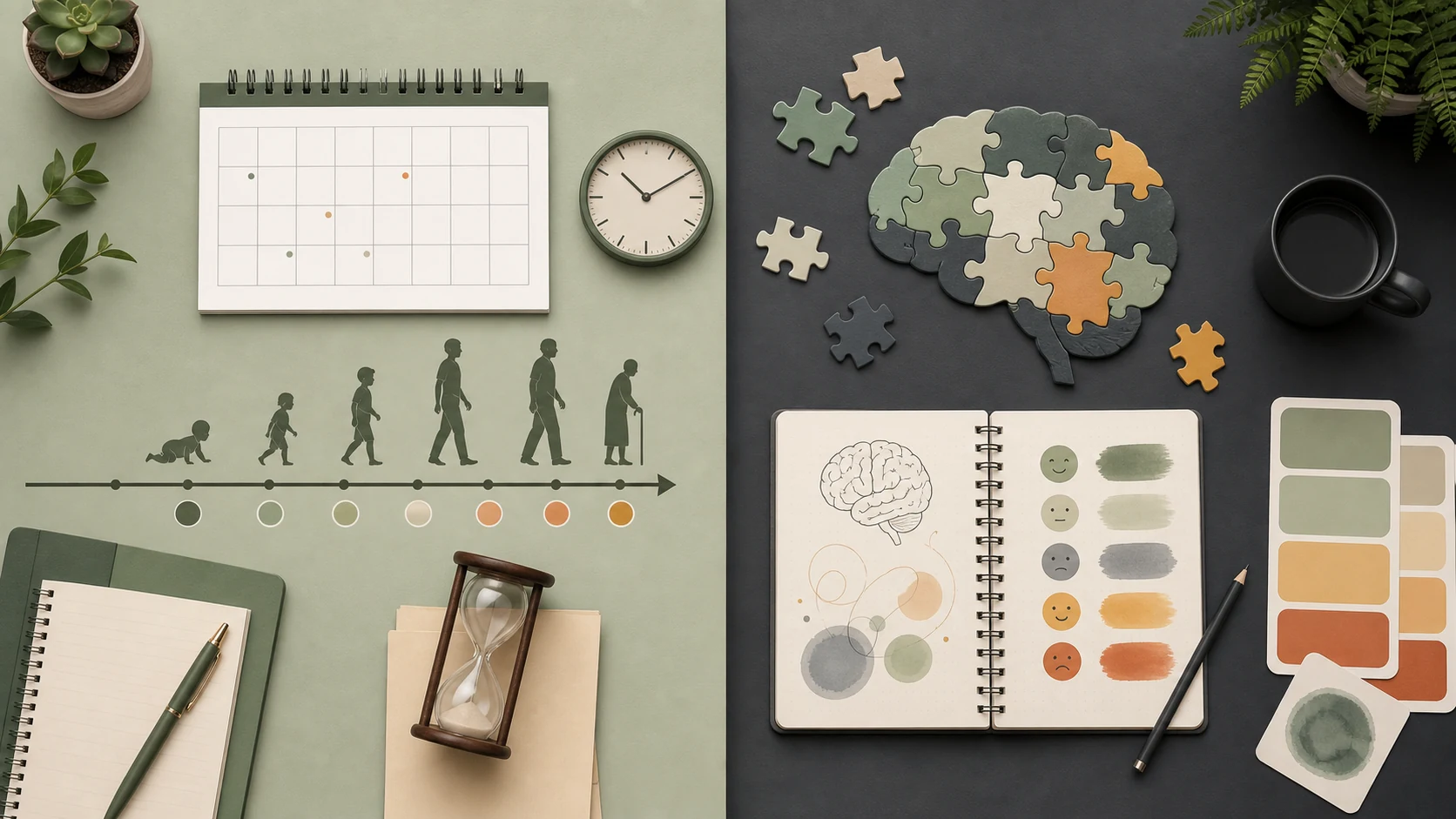
The core difference is objectivity. Chronological age is a fixed time measurement. Mental age is an interpretive snapshot of cognitive and emotional style. One comes from a birth date; the other comes from patterns in answers, behavior, or self-perception.
Think of chronological age as the date on a calendar and mental age as the mood of your inner operating system. Your chronological age moves forward at the same pace for everyone. Your mental age can feel higher, lower, or close to your chronological age depending on life experience, personality, stress level, relationships, culture, and current season of life.
Here is the practical comparison:
| Factor | Chronological age | Mental age |
|---|---|---|
| Based on | Date of birth | Thinking style, preferences, and emotional patterns |
| Changes how | Predictably, with time | Can feel different across contexts and life stages |
| Best used for | Records, eligibility, age-based planning | Reflection, self-awareness, personality-style insight |
| Main limitation | Does not explain personality | Not a clinical or scientific measurement in online tests |
This is why "mental vs chronological age" searches often lead to both calculators and psychology explainers. People want to know whether a gap between the two numbers means something important. Usually, it means something interesting, not something final. A higher mental age may suggest a preference for stability or reflection. A lower mental age may suggest playfulness, flexibility, or novelty seeking. Neither is automatically better.
How People Try to Calculate Mental Age
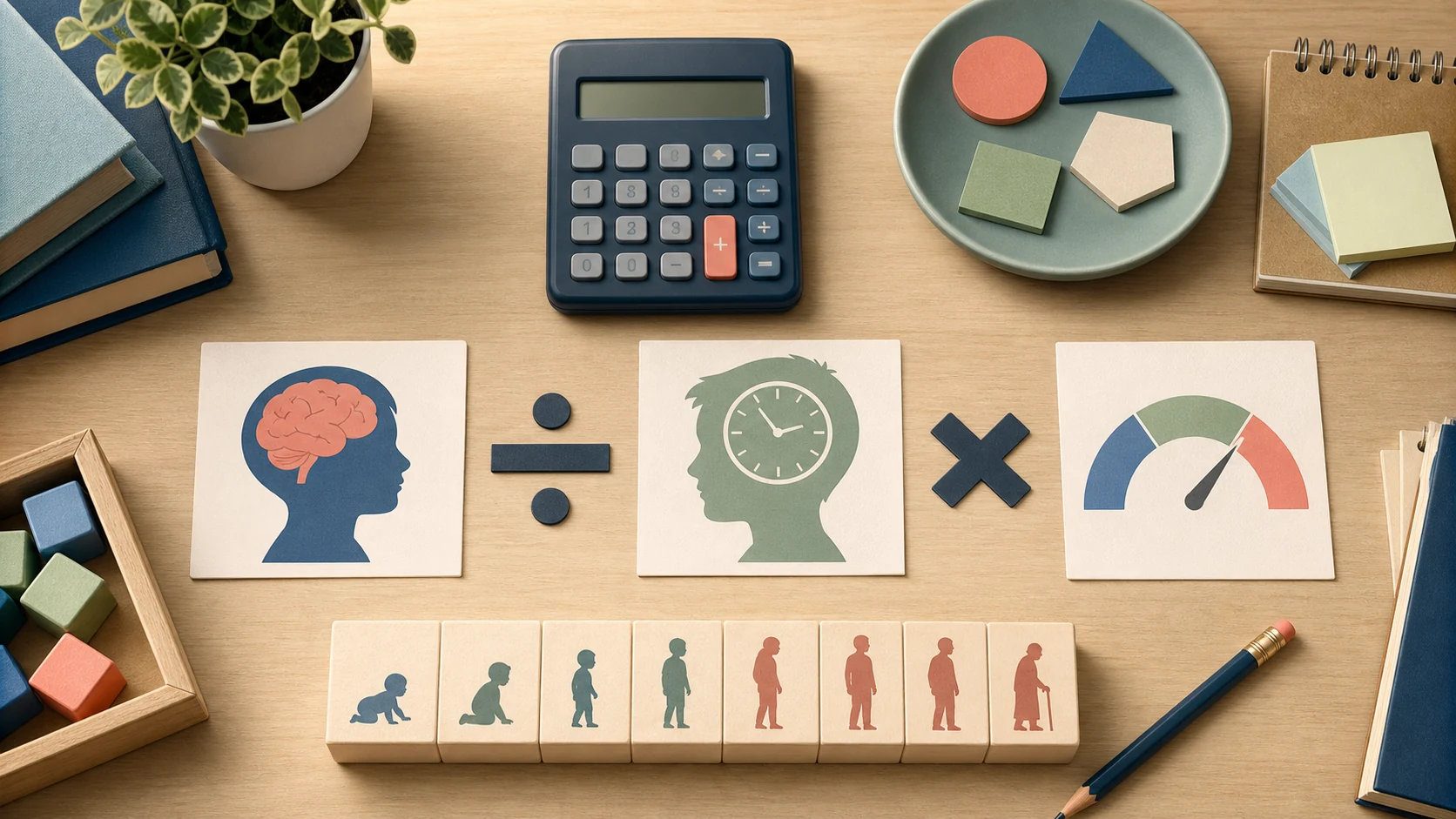
One common search is "mental age chronological age x 100." That phrase comes from an older formula associated with IQ history:
Mental age / chronological age x 100
In that older context, the formula was used to compare a child's test performance with age-based expectations. For example, if a child's test performance matched the average for an older age group, the formula produced a higher ratio. This historical idea explains why many people still search for "how to calculate mental age" or "mental age calculator."
For adults and casual online quizzes, however, this formula is not the best way to understand the concept. Adult personality, emotional maturity, cultural background, and life experience do not fit neatly into a single age-equivalent score. A modern mental age self-reflection tool is more useful when it asks varied questions about your preferences and then presents the result as a playful lens rather than a precise calculation.
If you do use a mental age calculator, look for three things:
- It should explain that the result is for entertainment and self-reflection.
- It should avoid claiming clinical accuracy.
- It should help you interpret the result with nuance instead of ranking ages as good or bad.
Where Biological Age Fits In
Searchers often compare mental age vs chronological age vs biological age, and the three terms can blur together. Chronological age is calendar time. Mental age is mindset or inner style. Biological age refers to physical aging markers, lifestyle, and health-related factors.
Keeping the terms separate prevents overreading. Mental age is not a medical age, and it should not be used to judge physical health or predict lifespan. It can still be useful language for reflecting on how you approach decisions, relationships, pressure, and fun.
What a Mental Age Test Can and Cannot Tell You
A mental age vs chronological age test can tell you how your answers line up with a particular quiz's model. It can suggest whether your responses lean more youthful, balanced, or mature in that model. It can also help you notice patterns you might otherwise overlook, such as whether you choose comfort over novelty, logic over impulse, or reflection over immediate reaction.
It cannot tell you your true psychological state with certainty. It cannot prove intelligence, emotional health, maturity, or personal worth. It also cannot capture every factor that shapes your inner life. Mood, sleep, culture, recent stress, and the way questions are written can all influence how you answer.
The healthiest way to read a result is to ask follow-up questions:
- Which answer felt most like me?
- Which result description felt accurate, and which part did not?
- Do I act differently with friends, work, family, or alone?
- Is my result describing a lasting pattern or just my current season?
Those questions turn a quiz result into a reflection exercise and keep the experience light.
Common Misunderstandings About High and Average Mental Age
"Highest mental age" and "average mental age" are common searches, but they can be misleading. A high mental age is not a trophy, and an average mental age is not a failure. These phrases work better as style descriptions.
A higher result may reflect patience, careful decision-making, or preference for quieter environments. A lower result may reflect optimism, curiosity, humor, and openness. The same number can mean different things for different people, so mental age charts should be read as conversation starters, not boxes.
A Simple Way to Compare Your Two Ages
If you want a practical mental age vs chronological age chart for self-reflection, skip rigid rankings and use a three-part comparison:
| Relationship | What it may suggest | Reflection prompt |
|---|---|---|
| Mental age feels lower than chronological age | Playfulness, flexibility, novelty seeking, or resistance to heavy routines | Where does my playful side help me, and where do I need more structure? |
| Mental age feels close to chronological age | A balanced connection between life stage and inner style | Which parts of my current life feel aligned with who I am? |
| Mental age feels higher than chronological age | Reflectiveness, stability, caution, or preference for depth | Where does my mature side support me, and where could I invite more lightness? |
This style of comparison avoids the trap of asking which age is "best." It focuses instead on fit. Your mental age may feel different at work than it does with close friends. It may shift after a major responsibility, a creative project, a stressful month, or a new relationship. That flexibility is part of the point.

How to Use the Comparison for Self-Reflection
The most helpful use of mental age vs chronological age is not to chase a perfect result. It is to notice your inner habits with more kindness. If your mental age feels older, ask whether maturity suits you or pressure has made play feel unsafe. If it feels younger, ask whether curiosity is energizing you or whether you are avoiding decisions that matter.
You can also compare your result with specific life areas. In friendships, money decisions, and creative projects, different sides of you may show up. A single number cannot hold all of that, but it can start a useful inventory.
For a low-pressure next step, explore your answers through a private inner-age quiz and then write down one pattern you want to keep, one pattern you want to question, and one small choice that would make your daily life feel more aligned. That keeps the experience educational, personal, and grounded.
FAQ
What is the difference between mental age and chronological age?
Chronological age is your actual age based on your birth date. Mental age is an interpretive idea that describes how your thinking style, emotional patterns, preferences, or self-perception may feel compared with different age stages. Chronological age is fixed by time; mental age is more flexible and reflective.
How can I calculate my mental age?
Historically, mental age was sometimes used in formulas such as mental age divided by chronological age x 100. For modern online use, most people calculate it through a quiz or calculator that asks about preferences, decisions, emotions, and lifestyle. Treat the result as a self-reflection prompt, not a precise measurement.
What is the difference between mental age and real age?
"Real age" usually means chronological age: the number of years since you were born. Mental age is about how old your mindset may seem. Someone can be 25 in real age but feel more settled, cautious, or reflective; someone can be 55 and still feel playful, experimental, and young at heart.
What are the four types of ages?
People often talk about chronological age, biological age, mental age, and emotional age. Chronological age is calendar time. Biological age relates to physical aging. Mental age reflects thinking style or inner outlook. Emotional age describes how someone tends to understand, express, and manage feelings.
Is a high mental age better?
No. A high mental age may suggest reflection, patience, or stability, but it is not automatically better than a lower result. A lower mental age may suggest curiosity, playfulness, or openness. The better question is whether your inner style supports the life you want.
Can mental age change over time?
Yes, the way you experience your mental age can shift. Life events, relationships, stress, creative work, responsibilities, and personal growth can all influence how mature, playful, cautious, or open you feel. Online results should be seen as snapshots, not permanent labels.
Is a mental age test the same as a psychology assessment?
No. A casual mental age test is usually designed for entertainment and self-reflection. It should not replace professional support, and it should not be treated as a clinical assessment. Use it as a light way to explore patterns and questions about yourself.