What is the Mental Age AP Psychology Definition? Understanding Cognitive Development
If you are studying for your advanced placement exams, diving into a psychology textbook, or simply exploring fun online personality quizzes, you have probably encountered the term "mental age." But what is the official mental age AP psychology definition, and how did this concept radically shape the history of intelligence testing? Long before the internet made it easy to casually test your "inner age" for fun, early psychologists were developing complex frameworks to measure human cognitive ability.
In this comprehensive guide, we will break down the precise AP psychology definition of mental age, explore its fascinating historical origins, and explain how a concept originally designed for early 20th-century classrooms has evolved into the engaging, deeply insightful self-discovery tools we use today.
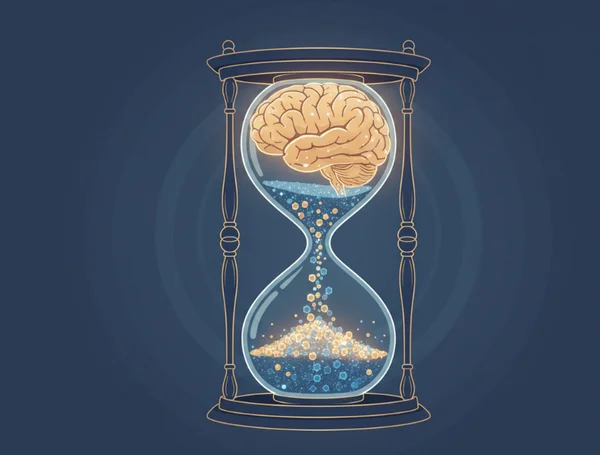
The Mental Age AP Psychology Definition
In the context of the AP Psychology curriculum, mental age refers to a specific measure of an individual's cognitive development relative to the average cognitive ability of others at a particular chronological age.
To put it more simply: if a 10-year-old child takes an intelligence test and scores precisely the same as the average 12-year-old, their chronological age is 10, but their mental age is defined as 12. Alternatively, if that same 10-year-old scores at the level of an average 8-year-old, their mental age would be considered 8. It expresses an individual's level of mental performance expressed in terms of the chronological age for which that performance is statistically typical.
The Historical Origins: Alfred Binet's Pioneer Work
You cannot fully grasp the mental age AP psychology definition without understanding its creator: French psychologist Alfred Binet. In 1905, the French government asked Binet and his colleague Théodore Simon to develop a practical method for identifying school children who were struggling academically and needed special education assistance.
Binet firmly believed that intelligence was not a single, fixed entity, but rather a complex collection of cognitive skills—like reasoning, memory, and problem-solving—that could potentially grow over time. He developed the first practical intelligence test, known as the Binet-Simon Scale. By testing a massive sample of children of various ages, Binet established what a "normal" or average score looked like for a 5-year-old, a 7-year-old, and so on. This benchmark became the foundation of the "mental age" concept.
The Birth of the IQ Formula
A few years later, German psychologist William Stern took Binet's concept of mental age and proposed a groundbreaking mathematical formula to easily quantify it. This became the famous Intelligence Quotient (IQ).
The original, historical formula for IQ taught in AP Psychology is: IQ = (Mental Age ÷ Chronological Age) x 100
- If a child's mental age strictly matched their chronological age (e.g., 10 / 10 = 1 x 100), their IQ was 100 (average).
- If a child's mental age was higher than their chronological (e.g., 12 / 10 = 1.2 x 100), their IQ was 120 (above average).
Why Modern Psychology Moved Beyond the Original Formula
While the mental age AP psychology definition is heavily tested, modern psychometrics has largely moved away from calculating IQ using this exact formula. Why? Because the mathematical logic ultimately breaks down in adulthood.
A 5-year-old processing information like an 8-year-old is significantly advanced. However, a 40-year-old processing information like a 60-year-old does not necessarily mean they are vastly "more intelligent." Cognitive development largely stabilizes in late adolescence. Therefore, modern intelligence tests (like the WAIS) calculate IQ by comparing an adult's test performance against an enormous statistical sample of other adults in their exact same age bracket, generating a relative normal curve score rather than using the old division formula.
From Clinical Testing to Self-Discovery
While the strict, clinical use of mental age has evolved significantly, the broader concept—evaluating a person's cognitive, emotional, and psychological maturity rather than just counting their birthdays—remains incredibly compelling.
Today, identifying your "mental age" has evolved into a popular, insightful tool for deep self-reflection. Perhaps you are a 20-something who feels like an "old soul" and prefers quiet evenings reading over loud parties. Or maybe you are a highly successful 40-something who maintains a brilliant, childlike curiosity and a playful approach to problem-solving. Exploring the gap between your chronological age and your psychological maturity can provide fascinating insights into your unique personality.
For a modern, entertaining, and highly insightful approach to this classic concept, you can take a comprehensive Mental Age Test. While these online tools do not provide a clinical Binet-style IQ score, they thoughtfully evaluate your decision-making styles, lifestyle preferences, and emotional responses. By choosing to unlock an optional, AI-generated personalized report after taking the base test, you can even gain a profound understanding of your unique cognitive strengths, emotional challenges, and exactly what your specific "inner age" reveals about your approach to life.

Conclusion
Understanding the mental age AP psychology definition is essential for mastering the historical foundations of intelligence testing. Originated by Alfred Binet as a compassionate way to help struggling students, mental age represents a person's cognitive ability relative to their peers. While clinical intelligence testing has mathematically evolved far past the original IQ formula, the captivating contrast between how old we are and how old we feel continues to drive our curiosity. Whether you are studying for your next big AP exam or simply looking for a fun, revealing perspective on your own emotional maturity, exploring your mental age is a wonderful journey into understanding your authentic self.
Frequently Asked Questions
Who coined the term mental age in psychology?
The concept of mental age was pioneered by French psychologist Alfred Binet in the early 1900s. He developed it as a practical scale to identify school children who required targeted educational assistance by comparing their cognitive performance to the average performance of their specific age group.
What is the formula for IQ using mental age?
The historical formula for the Intelligence Quotient (IQ), initially proposed by William Stern, is: IQ = (Mental Age / Chronological Age) x 100. For example, a 10-year-old with a mental age of 12 would have an IQ of 120.
Why do modern IQ tests no longer use the mental age calculation?
The original formula works well for children, but it breaks down when assessing adults because cognitive development naturally stabilizes and does not scale linearly with chronological age. Today, adult IQ scores are determined by heavily comparing an individual's performance to the statistical average of their specific age demographic on a normal distribution curve.
What is the difference between chronological age and mental age?
Chronological age is simply the amount of time that has passed since you were born—your literal age in years. Mental age, historically, is a measure of your cognitive performance compared to a normative age group. In modern psychological contexts outside of IQ testing, "mental age" often informally refers to an individual's emotional maturity and cognitive flexibility.
Can my mental age be younger than my chronological age?
Yes. In a strict historical context, it would mean a child performed below the average of their peers on a cognitive test. However, in modern, non-clinical self-reflection contexts (like fun personality assessments), having a younger "mental age" simply highlights positive traits like high creativity, a playful spirit, and an open, highly adaptable mindset.